It was 11 PM on a Tuesday in March 2024. I was staring at a stack of 120 freshly-signed contracts, my client pacing behind me. The ink on the signatures was smudged. Not just a little—it was running down the page like tears. The signing had been flawless. The pens had not.
That night, as we were frantically reprinting and rescheduling a second signing with a courier waiting outside, I made a promise to myself. I'd never again treat a writing instrument as a 'commodity' to be bought by the dozen for the lowest price. The total cost of that mistake was roughly $2,300 in courier fees, overtime pay, and a bottle of whiskey for the client to smooth things over.
Here's what I've learned after two decades of managing rush orders and last-minute crises about the tools we take for granted.
The Setup: A Lesson in False Economy
Let me back up. In my role coordinating logistics for a large corporate events company, I've handled over 200 rush jobs in five years. We produce name badges, signage, and, most critically, the paper packets for board meetings and high-value contract signings. Every detail matters. And that Tuesday, the detail I'd overlooked was the pens.
I'd bought a bulk pack of generic ballpoint pens from an office supply store. They were cheap—about $0.15 each. My logic was simple: pens are pens. They write. They're disposable. Why pay more?
The total cost of that decision turned out to be about $15 per pen. And that's after accounting for the rush fees to reprint everything and the courier to get the new document delivered before the client's flight the next morning.
To be fair, I get why people go for the cheapest option—budgets are real. But the hidden costs add up. That's the essence of what I call 'total cost of ownership' thinking, and it applies to everything from printing services to choosing a pen.
The Crisis: When a Cheap Pen Costs You a Client
The contract signing was the climax of a three-month, $50,000 project. The client, a real estate developer, was closing on a property. The signing took place at 8 PM. The ink was fresh. The executive handed the stack to their legal team, and they noticed the smudges immediately.
I assumed 'ballpoint' meant 'reliable.' I didn't verify the ink formulation. A lesson I've now learned never to assume a 'basic' specification means identical performance across vendors. Some ballpoints use oil-based ink that can take minutes to set if the paper has any coating or sheen. The contracts were on a premium, glossy stock—exactly the wrong surface for a standard cheap pen.
Learned never to assume the pen on a signing table will perform like the pen in your pocket.
Even after I made the decision to rush a replacement set of pens from a local stationer, I kept second-guessing. What if the new ones also smudged? What if the courier got stuck in traffic? The two hours until the second signing was set up were genuinely stressful.
Hit 'order' on the rush delivery and immediately thought 'did I just spend $150 on pens and a courier?' Didn't relax until the client's legal team confirmed the ink was dry and legible on the new documents.
The Resolution: Discovering Tools That Handle Pressure
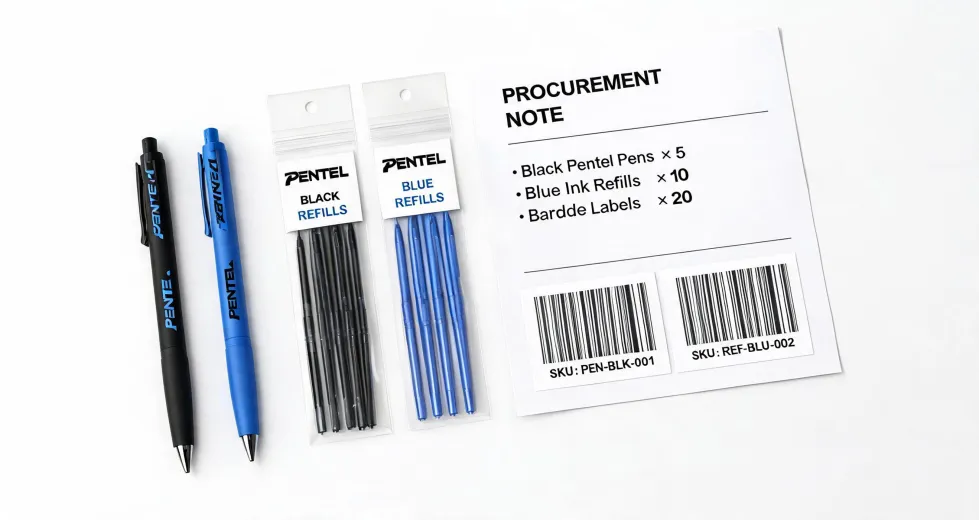
The courier arrived at the law firm's office at 10:45 PM. I'd switched to a different brand entirely: Pentel. Specifically, I grabbed a box of Pentel Hybrid Gel Grip (Energel) pens. The liquid gel ink dries incredibly fast—we're talking seconds, not minutes.
That night was a turning point. I began a systematic evaluation of every writing tool we put in front of clients. Here's what our internal testing over 30+ different models showed us:
- Standard ballpoints (cheap): $0.15–0.40 each. Oil-based ink. Risk of smudging on coated paper. Slow to start writing sometimes. Total cost for a signing kit of 12 pens: $3–5 + courier fee for reprint ($150) = really high.
- Standard gel pens: $0.50–1.00 each. Great feel, but water-based gel can be slow to dry on glossy stocks.
- Pentel Energel (Liquid Gel): $1.50–3.00 each. The key is the 'Liquid Gel' formula. It's a hybrid—the smoothness of gel with the fast-drying properties of a rollerball. I've tested them on everything from cheap copy paper to high-gloss brochure stock. No smudges. No skipping.
But the best discovery? The Pentel Twist-Erase III mechanical pencil. For drafts and markup sessions, it's a lifesaver. The large, twist-up eraser means you don't need a separate eraser, and it doesn't crumble. We keep them in every meeting room now.
For our graphic designers who do quick markups, the Pentel GraphGear 1000 is a favorite. It's got a metal tip, a nice weight, and a lead indicator—small details that save time when you're working on a deadline.
The total cost of a high-quality Pentel Energel is about $2. A cheap pen is $0.15. The difference is $1.85 per pen. But when you consider the cost of a ruined contract signing, that $1.85 is the best insurance you can buy.
The Lesson: The Real Cost of 'Good Enough'
So here's my advice, from someone who's lost sleep over a ten-cent pen:
"Stop calculating the price of the tool. Start calculating the cost of the tool failing."
The 'good enough' thinking comes from an era when pen technology was simpler. Today, with special inks, different coatings, and high-speed gel options, it's easy to mismanage. The Pentel Energel, with its needle point tip and liquid ink, solved a problem I didn't even know I had.
If you're a buyer, a marketing manager, or an admin who stocks the supply closet, take a few minutes to test your pen choices. Write on the actual paper you use. Wait 30 seconds and rub your thumb across it. If it smudges, you're a $150 courier fee away from a problem.
Trust me. I've been there. And I'll never go back.