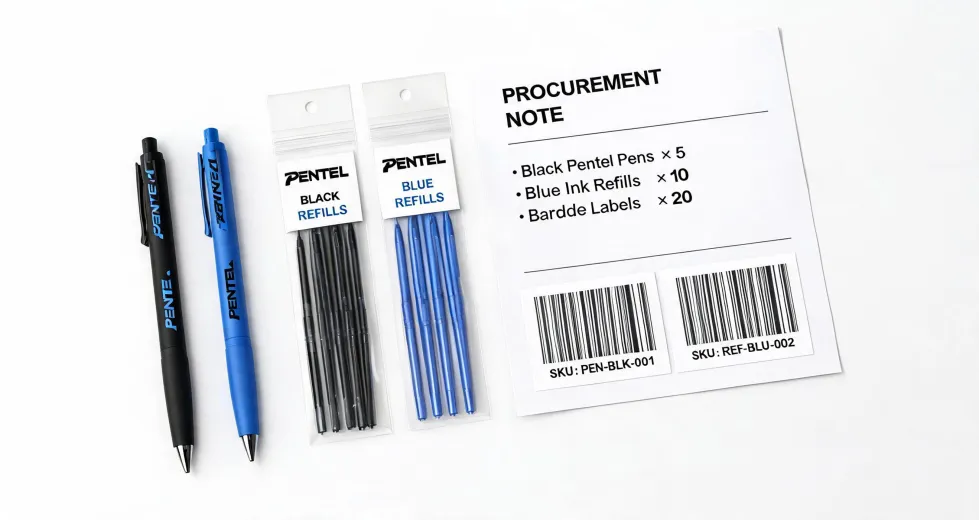
I’ll say it plainly: I would rather pay for a genuine Pentel BL407 refill and be sure my Pentel Twist-Erase pencil won’t quit during an important signature than save a few dollars on a mystery pack of “compatible” lead.
That position comes from my job and a fair amount of frustration. I’m a quality and brand compliance manager at an office and school supply distributor. I review incoming products before they go into our catalog—roughly 400 SKUs a quarter. In 2024 I rejected about 7% of first deliveries because the actual item didn’t match the confirmed specification. I don’t say that to sound like the gatekeeper who loves rejecting things. I say it because I’ve seen what happens when small supply decisions go wrong.
The Pentel Twist-Erase Pencil Isn’t Flashy. That’s the Point.
The Pentel Twist-Erase pencil has been around long enough that nobody calls it exciting. It looks like a workhorse. The twist eraser is useful, the grip feels comfortable after a full day of notes, and the mechanism doesn’t surprise you.
But a pencil is only as good as the refill you put in it. That’s where I see people take a completely unnecessary risk. They’ll buy a solid pencil and then grab the cheapest lead refill on the shelf. It seems like a small choice. It isn’t.
Why Genuine Pentel BL407 Refills Matter
In our warehouse, the refill SKU that shows up for older and newer Pentel Twist-Erase users alike is the Pentel BL407 refill. I’ve opened enough boxes to know that not all lead is made the same. Genuine Pentel lead is manufactured to a consistent standard—diameter, hardness, and dust control are all part of the product, not afterthoughts.
Cheap refills can look fine in the package. Then you load them into a pencil and discover that they shed graphite dust all over your desk, or they snap when you press down a little harder mid-word. The first time that happens is annoying. The second time, you start checking your own handwriting pressure because you think you’re the problem. You aren’t. The lead is.
Honestly, I’m not sure why some suppliers can’t make a reliable compatible refill. My best guess is that it’s harder than it looks—graphite formulation, binder consistency, and diameter tolerance all matter. Pentel has been doing this long enough that their quality control is baked in.
What a Cheap Refill Really Costs
Let’s talk about the real cost of a bad refill. I’m not talking about the price tag. I’m talking about the meeting where you’re taking handwritten notes, the lead breaks, and you lose the thread because you’re digging for another pencil. I’m talking about the contract where your signature looks uneven because the lead started skipping. Small things, yes. But small things become expensive when they happen at the wrong moment.
I still kick myself for not catching a shipment of off-brand refills before it went to one of our school accounts a few years ago. The order arrived, the school stocked the supply closet, and within a week we had complaints about lead breakage and smudged worksheets. The replacement shipment cost us time and goodwill, and it delayed a classroom order that should have been painless.
That’s the part people forget: urgency doesn’t ask for permission. When you’re up against a deadline, you don’t have time to troubleshoot a pencil. You need it to work.
The Printer Test: Defaults Are the Real Deadline Killers
I see the same pattern with office technology. If you’ve ever searched for how to set default printer in Windows 11 in a panic, you know what I mean. The printer worked fine last week. Then someone installed a new driver, the default switched, and your document printed in the conference room instead of by your desk. The issue wasn’t the printer—it was that nobody checked the default until the deadline made it urgent.
Your mechanical pencil refill works the same way. It’s a default. If you set it up properly once, you don’t have to think about it again. Choose a refill you trust, and it quietly does its job. Choose a cheap one, and you’re gambling that nothing will change at exactly the wrong time.
Why We Ignore Small Systems Until They Fail
People will happily spend ten minutes on a dog age calculator to learn that their four-year-old Lab is “middle-aged,” but they won’t spend two minutes checking what lead refill they put in their favorite pencil. I read the Lincoln Journal Star most mornings, and I notice the same thing in newsroom culture: reporters care deeply about their sources and their stories, but the tools they use all day are often an afterthought—until one stops working during a rewrite.
I don’t fully understand why we treat small tools that way. My best guess is that office supplies feel too low-stakes. They feel like background items. But the things we rely on under pressure are never really background. They’re the difference between “this will probably be fine” and “this is handled.”
What About the Price Difference?
I know the objection: genuine Pentel refills cost more than no-name options. I’m not going to pretend the difference is insignificant for every budget. But I’ve reviewed enough product to know that a low price per unit doesn’t mean much when the product doesn’t perform to spec.
Think of it as an insurance premium. You buy certainty for the moments that matter most. A missed deadline, a messy client document, or a supply chain headache can cost far more than the few dollars you saved on refills. I’ve seen a $22,000 redo caused by far smaller mistakes than a broken pencil lead.
The Bottom Line
If you keep a Pentel Twist-Erase pencil in your drawer, don’t pair it with a mystery refill. Buy the Pentel BL407 refill that belongs with it, and let it fade into the background where it belongs.
I’m not saying a genuine refill will make you a better writer or solve your printer problems. I’m saying that reliability is a feature. When you’re out of time, that’s the only feature that matters.