-
There’s no single right answer for a rush order
- Scenario A: You need pencils for exams, drafting, or fast notes
- Scenario B: You’re organizing cards or class handouts in a binder
-
Scenario C: You need to justify the spend with a CPM calculator
- Scenario D: You want to paint on wood and don’t know if acrylic works
-
How to tell which scenario you’re actually in
There’s no single right answer for a rush order
In my role coordinating rush orders for education and event clients, I’ve handled about 200 mid-range projects in eight years. The mistake I see most often is treating every last-minute request as the same. It isn’t. In March 2024, 36 hours before a school district’s science fair, we had to split a single supply order between 0.5 and 0.7 lead because the original shipment was mislabeled. That was not a “which pencil is better” problem. It was a “what can we deliver before the doors open” problem.
If you’re searching for pentel, a pentel mechanical pencil 0.7, a pentel .5 pencil, a pokemon binder, a cpm calculator, or asking can i use acrylic paint on wood, you’re probably under some deadline. The right move depends on whether the bottleneck is writing precision, organization, budget math, or a new surface.
Here are four scenarios. Find the one that sounds like your project, then use the checklist at the end to confirm.
My experience is based on about 200 mid-range rush orders with education and event clients. If you’re working with international sourcing or industrial quantities, your experience might differ.
Scenario A: You need pencils for exams, drafting, or fast notes
This is the classic back-to-school or last-minute test-prep panic. The question isn’t “which pencil is best?” It’s “what line weight can you live with for the next three hours?”
Pentel mechanical pencil 0.7
0.7 mm lead is thicker. It breaks less on cheap paper and fast handwriting. If you’re taking notes, filling in forms, or writing an exam with a heavy hand, the Pentel mechanical pencil 0.7 is usually the safer rush choice. Darker line, fewer stops to clear jams.
Pentel .5 pencil
0.5 mm is finer. It’s better for math, diagrams, drafting, and small writing. The Pentel .5 pencil gives cleaner details, but it’s way less forgiving if you press hard or use rough paper. Plus, not all refills are equal.
I assumed “0.5 and 0.7 are basically the same.” Didn’t verify. Turned out the smaller lead snapped constantly for one client’s field crew, while the 0.7 smeared less but looked heavier on their forms. That was a $180 reorder we didn’t need.
If you’re buying for a group, don’t mix lead sizes without labels. I said “same specs.” They heard “cheapest equivalent.” Result: we got 0.5 refills for 0.7 pencils and spent a morning sorting returns. Ugh.
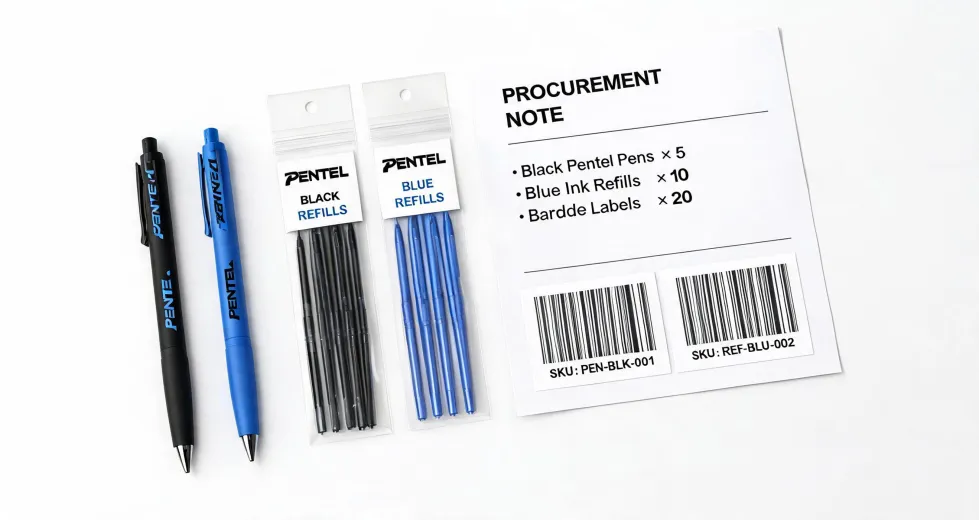
Emergency rule: order refills with the pencils. Ask what’s included before price.
Scenario B: You’re organizing cards or class handouts in a binder
A Pokemon binder is not just a binder. If you’re storing trading cards, the pages matter. Cheap binders can have PVC pages that are not acid-free; over time, that’s bad for cards. If you’re using it for school handouts, a standard 3-ring binder is fine.
For collectibles
Look for acid-free, archival-safe pages. Side-loading pages reduce the chance cards slide out. A 9-pocket page is common for Pokemon cards. Check the ring size: larger rings hold more pages but can dent cards if the binder is overfilled.
For class or office use
Standard letter-size pages, 1–3 inch rings. If you’re also packing Pentel pens or pencils, use a pencil pouch so graphite doesn’t mark the pages.
I assumed binder pages were standard. Didn’t verify. Turned out some pokemon binder inserts were 9-pocket side-loading, while our replacement pages were top-loading. We had to re-pack 40 pages at 11 p.m. (thankfully, no cards were damaged).
Transparency note: if a vendor lists “binder” without page details, ask about material, pocket orientation, and ring size. That’s not nitpicking. It’s the difference between storage and damage.
Scenario C: You need to justify the spend with a CPM calculator
Now the project is not the supplies; it’s the budget. If you’re comparing a last-minute print run, a digital ad buy, or an event handout, a CPM calculator helps you normalize cost. CPM means cost per mille, or cost per 1,000 impressions.
Formula: CPM = (cost ÷ impressions) × 1,000.
Say a rush flyer package costs $240 and you expect 15,000 impressions. That’s (240 ÷ 15,000) × 1,000 = $16 CPM. If another option costs $300 but reaches 25,000 people, that’s $12 CPM. The higher sticker price is actually cheaper per impression.
But here’s where transparency matters. I’ve learned to ask “what’s NOT included” before “what’s the price.” Setup fees, rush fees, and color matching can turn a clean quote into a mess.
“The vendor who lists all fees upfront—even if the total looks higher—usually costs less in the end.”
Reference points from publicly listed prices, January 2025:
- 1,000 flyers, 8.5×11, 100 lb gloss text, single-sided, standard turnaround: online printers $80–$150; local print shops $150–$300.
- Rush printing premiums: next business day +50–100%; 2–3 business days +25–50%; same day +100–200% when available.
- Offset setup: plate making $15–$50 per color; custom Pantone color $25–$75 per color. Many online printers include setup in quoted prices.
That’s why a cpm calculator is only half the job. The other half is an all-in quote. If the quote excludes setup or rush fees, your CPM math is fiction.
Scenario D: You want to paint on wood and don’t know if acrylic works
Short answer to can i use acrylic paint on wood: usually yes, if you prep the surface and seal it. Acrylic paint is water-based, flexible, and sticks well to clean, dry wood. It’s not a stain, though. It sits on top of the wood rather than soaking in like an oil stain.
Basic prep
Sand the wood smooth, wipe off dust, and fill any holes. If you want the grain to show, you can skip a heavy primer, but a primer or sanding sealer gives a more even color. For outdoor wood, use an exterior-grade primer and a waterproof topcoat.
Application
Thin the first coat slightly with water if the paint is thick. Let it dry completely between coats. Acrylic dries fast—often 20–30 minutes to touch—but full cure can take days depending on humidity. Don’t rush the topcoat.
I’ve only tested this on indoor pine and birch panels. If you’re working with oily tropical hardwoods or exterior cedar, your experience might differ. Oily woods can repel water-based paint unless you prep and prime carefully.
If you’re adding details or lettering, a Pentel brush pen or fine marker can work over cured acrylic for small labels, but test on scrap first. Some markers can react with the paint or topcoat.
How to tell which scenario you’re actually in
Ask four questions:
- What is the deadline? If it’s today, choose the forgiving option: 0.7 lead, standard binder pages, all-in pricing, simple paint prep.
- Who is the user? A heavy-handed exam taker, a collector, a finance lead, or a first-time painter? Their needs change the pick.
- What’s the surface or constraint? Rough paper, card sleeves, print impressions, or raw wood. Match the tool to the surface.
- What’s the true all-in cost? Use a CPM calculator for reach, but demand setup and rush fees upfront.
Bottom line: there’s no universal “best” answer. A pentel mechanical pencil 0.7 is not automatically better than a pentel .5 pencil. A pokemon binder is only right if the pages protect what you’re storing. A cpm calculator is only useful with honest inputs. And acrylic paint on wood works—if you prep and seal it.
If you’re in a rush, buy the version that reduces your biggest risk. Then get the extra refills, pages, or topcoat in the same order. That’s the boring stuff that saves the deadline.