-
The comparison that starts with a search bar
-
What I compare before approving an office writing tool
-
Line stability at normal hand pressure
-
Changing answers: mulch calculator math vs. dividend calculator math
-
Workspace chaos: permanent marker and other quality tests
-
Refill economics and compatibility
-
Which one should you actually buy?
The comparison that starts with a search bar
When someone types 'Pentel mechanical pencil 07' into a search box, they're usually deciding whether a 0.7 mm pencil deserves a permanent spot in their carry. When someone types 'Pentel LRN7 refill,' they're asking a slightly different question: should I buy this refill again, or move on to a different tool?
I review writing instruments for an office supplies distributor. My role is quality and brand compliance. Roughly 200 individual products land on my desk every year. I check click feel, sleeve straightness, refill fit, and ink behavior. In 2024 I rejected about 8% of first deliveries because of small problems that would have turned into customer complaints. That rejection number isn't a swipe at any brand. It's what happens when I compare products against the spec sheet instead of against my mood.
I'm not here to tell you Pentel is the only brand worth buying. That isn't useful, and it isn't true. What I can do is compare two products that show up in the same online searches:
- The classic Pentel mechanical pencil 07 — a 0.7 mm pencil body, often the Sharp P207, built for steady everyday writing and drafting.
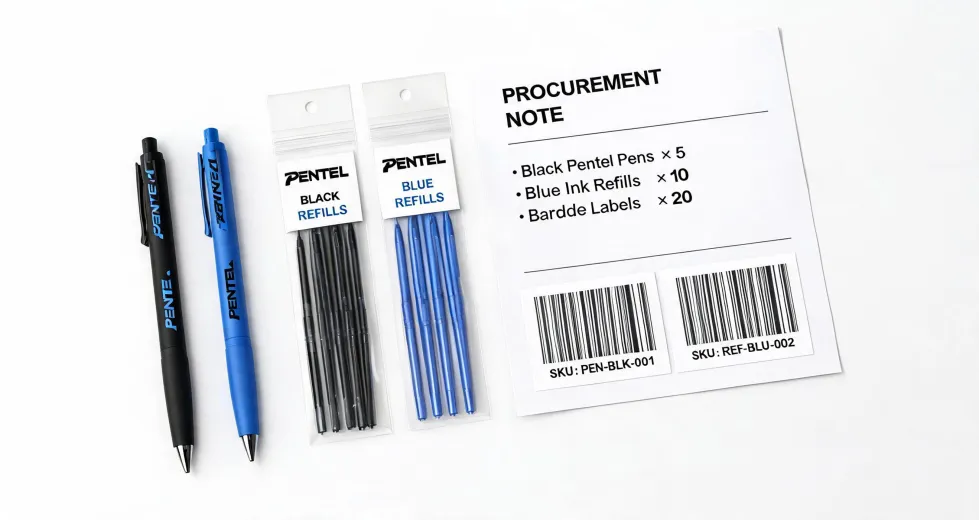
- The Pentel LRN7 refill — a liquid gel refill made for Pentel's EnerGel-style pen bodies. It writes once you slide it into a compatible pen.
Comparing a pencil to a refill isn't fair unless you name the full setup. So for the rest of this article, 'the LRN7' means a compatible EnerGel pen with the LRN7 refill inside. That's the version people actually mean.
What I compare before approving an office writing tool
If I compare categories, I get nowhere. A mechanical pencil isn't a failed gel pen, and a gel pen isn't a permanent pencil. The differences only matter when I ask how each behaves under daily conditions.
I use four questions:
- Can I make a clean line at normal writing pressure?
- What happens when the answer changes?
- Can it survive real workspace chaos?
- Is the refill system simple enough for a restock order?
The first three matter to individual users. The last one matters to anyone who buys supplies for a team.
Line stability at normal hand pressure
One reason people stay with a Pentel mechanical pencil 07 is the fixed sleeve on models like the Sharp P207. The sleeve holds the lead steady. A wobbly sleeve is the fastest way to turn good lead into broken pieces. In my checks I angle the pencil to about 60 degrees and press hard enough to leave a visible mark. The P207 has passed that check in every batch I've reviewed. Some products get scratchy at that angle; this one usually doesn't.
The LRN7 is a different animal. It's a liquid gel refill, not an oil-based ballpoint refill. It lays down a saturated line with less hand pressure. Gel ink can smear before it dries, so I wait a second before I close that notebook. In my ink checks, the LRN7 has behaved like a fast-drying gel, but I still don't rub a highlighter across it immediately.
So which one has better line stability? There's no clean winner. The pencil line is dry the instant it touches paper. The gel line has more contrast and doesn't need aggressive pressure. Choose based on whether you'll need to erase or need the line to stand out.
Changing answers: mulch calculator math vs. dividend calculator math
Here's a mental trick that saves me from choosing between these tools. Think about which calculator produced the number you're writing down.
A mulch calculator is a planning tool. You type in length, width, and depth to estimate bags of mulch for a flowerbed. The result changes when you decide you want a deeper layer. Those numbers are meant to be erased and revised while you're working out the plan. If I write mulch-calculator numbers down at all, I use the mechanical pencil.
A dividend calculator is closer to a final review. You're not measuring bags; you're estimating income based on shares and yield. Once that number looks right, it goes into a note or a document that someone else might read. That's where I use a pen with the LRN7 refill. The gel line says 'this one is settled.'
If I used the LRN7 for the mulch numbers, I'd run out of white-out by lunch. If I used the pencil for the dividend number, I'd be tempted to revise it every time I walked past. The tool influences how permanent the thought feels.
Workspace chaos: permanent marker and other quality tests
Let's talk about the search term that looks completely out of place: how to get permanent marker out of clothes. It's not out of place. Quality testing isn't only about how a product writes on clean paper. It's how it holds up when labels bleed, a marker cap slips, or the new assistant borrows a permanent marker and tucks it into a shirt pocket.
If permanent marker lands on fabric, treat it quickly. Put the stained area on a clean cloth, dampen a cotton swab or cloth with 91% isopropyl alcohol, and blot from the outside of the stain toward the center. Don't rub. Rubbing pushes the pigment into the fibers. Then wash the garment as you normally would. Test an inside seam first because alcohol can damage some dyes and synthetic materials. Hand sanitizer can work if it contains alcohol, but it leaves residue to rinse out. I can't guarantee every stain lifts, because fabric chemistry varies.
The connection to writing tools? A product should be predictable under small disasters. If the page is going to be revised, choose the pencil. If the line needs to stay, choose the LRN7. And if you're carrying both, a permanent marker accident doesn't have to ruin your whole day.
Refill economics and compatibility
I can't talk about these without talking about the restock side. A 0.7 mm mechanical pencil needs lead and eraser refills. The lead tube for the Pentel mechanical pencil 07 is inexpensive and lasts a long time if you don't click out extra lead because you're bored. The real cost shows when poor sleeve alignment makes lead snap. That's why I keep saying the pencil body matters, not just the lead.
The LRN7 refill costs more per unit than a lead tube. But it replaces the entire ink cartridge, so you're not throwing away a pen body every time the ink runs dry. Over a year, the gel refill habit is pricier. It earns that cost when you need a clean, finished line.
The catch is compatibility. A refill marked LRN7 is made for Pentel's EnerGel-style body family. It doesn't fit every pen in a drawer. When I review it for our catalog, I pair the exact LRN7 code with the exact pen body before I approve it. Since I started adding compatibility notes to our inventory specs in 2022, our internal order errors dropped about 14%. That's our number, not an industry estimate, but it's the kind of check that saves real money.
As of January 2025, both the P207 and the LRN7 are still standard items in Pentel's office supply lineup. Prices vary by retailer, so check the current listing and return policy before you order a large batch.
Which one should you actually buy?
If I had to review these as a single product, I'd reject the brief. They aren't substitutes. They're two stages of the same workflow.
Buy the Pentel mechanical pencil 07 if you spend most of the day planning, sketching, or handling numbers that change. It's the tool I'd keep for rough math from a mulch calculator, for outlines, and for all the notes you'll rewrite later.
Buy the Pentel LRN7 refill for the compatible EnerGel pen you use when the work is finished. That's the tool for signatures, final project notes, and the clean numbers you got from a dividend calculator.
Looking back, I should have told customers this in my first year of reviewing products. Instead, I tried to crown one winner. It took me about 200 product reviews to understand that most desk-tool decisions are context decisions, not superiority contests. If you make the context clear, the right tool starts to feel obvious.
So keep a 0.7 mm pencil for the thinking phase. Add an LRN7 gel refill for the finishing phase. And if a permanent marker ends up on your sleeve, now you know what to do.