The Slack Message That Started It
In March 2024, our operations lead sent a Slack message that started a small obsession: “We’re moving twelve people to full-time remote. They need printers. What is the best printer for home use?”
I should have been able to answer that in an afternoon. I’m the procurement manager at a 40-person marketing company. I’ve managed our office supplies and services budget of about $80,000 a year for six years, negotiated with more vendors than I care to count, and documented every order in our cost tracking system. But the search for a “best” printer turned into an 8-month project, and I learned more about hidden fees than I did about printing technology.
The Calculator Watch Approach
I’ve been the type to show up with a calculator watch and a notebook since high school. The watch died years ago, but the habit stayed: when a request lands on my desk, I don’t ask “what’s the price?” I ask “what’s the total cost over a year?”
Then a co-worker sent me the female delusion calculator website as a joke. It calculates how many people’s expectations about a partner are wildly out of line with reality. It’s funny because the gap is so real. Printer shopping is the same. Everyone wanted the “best” printer, but nobody could define what that meant beyond the number on the box.
The Shortlist That Made No Sense
I started with a shortlist. I used a Pentel GraphGear 1000 automatic drafting pencil for the notes because it’s the pencil I trust when I need to draw a clean line between good math and bad math. That might sound like an odd detail, but when you’re comparing a $120 printer to a $420 one, precision is the whole game. Every skipped decimal point comes back later as a surprise cost.
The first search results for “what is the best printer for home use” were unhelpful. Most were reviews based on unboxing, a test page, and a photo of the setup app. Almost none mentioned the ink plan, the paper costs, or the $12 USB cable that isn’t in the box. Those reviews weren’t wrong, exactly. They were just incomplete.
Some of our internal search queries were even more confusing. One person typed “Pentel Frixion pen” into the supply catalog, even though Frixion is actually a Pilot product, not a Pentel one. That mix-up turned out to be a useful reminder: a familiar name can lead you to the wrong product if you don’t check the details.
One vendor quoted $180 per printer, free shipping. It looked like the obvious choice. Then I asked a question I’ve learned to ask after six years in procurement: “What’s not included?”
The answer was a list. The printer didn’t come with a cable. It didn’t come with a full set of cartridges. The “free” starter cartridge triggered a monthly auto-ship plan that cost $25 after the first two months. Add the paper, and the total first-year cost was around $505 per person—for a printer that felt like a deal at $180.
I had a moment of doubt. The upside of the budget quote was $720 in upfront savings across twelve people. The risk was that a locked-in cartridge plan would eat that saving by summer. I kept asking myself: is $720 worth the risk of paying twice the realistic cost per page for three years?
The numbers pointed one way. My gut pointed the other. Every cost analysis said the budget quote had the lower total cost of ownership, if—and only if—we never printed in color. We do print in color. And the color upgrade was another line item that didn’t appear until checkout.
The Turning Point
That was my turning point. I stopped searching for the best printer and started searching for the most transparent total cost. The vendor who listed every fee upfront had a slower machine and a louder machine. Not ideal, but workable. The number on its quote was the number we eventually paid. The budget vendor had a better-looking printer and a worse-looking true cost.
In printer shopping, you get speed, cost, and reliability. Pick two. I chose the unfashionable two: cost and reliability.
I also checked the print-shop alternative. If all twelve people needed was an occasional 1,000-copy flyer run, the answer to “what is the best printer for home use” would be “don’t buy one.” Online print shops list 1,000 flyers at $80-150 for standard 8.5x11 gloss, single-sided, on a 5-7 day turnaround, based on publicly listed prices I found in January 2025. That made the home printer decision about convenience, not volume. And convenience has a price too.
The Result
We ended up ordering twelve printers from the transparent vendor. First-year cost, including a cable and a spare set of cartridges, was $3,840, or $320 per person. The budget quote looked better on paper: $2,160 upfront. But by month nine, the auto-ship plan alone would have pushed the total for twelve people past $4,000.
The transparent quote wasn’t the lowest. It didn’t have to be. Why does this matter? Because the invoice in December matched the estimate in March.
I don’t have hard data on how many companies make this same mistake. But based on tracking our own orders, I’d say the real budget overruns came from the things we didn’t count at the beginning: cables, paper, ink, and the time spent arguing with support about a subscription we forgot to cancel.
I also have mixed feelings about the outcome. The transparent vendor’s printer is slower and noisier than the flashier alternative. Part of me still wants the fast one. Another part remembers that “fast and cheap” is usually an oxymoron. I compromised with slower and honest.
This worked for us, but our situation was specific: a 40-person B2B marketing company, mostly predictable printing, no one traveling with the device. If you’re a sales team printing from hotel lobbies or a teacher printing at 11pm, your calculation could be different. I can only speak to what we measured.
What I’d Do Differently
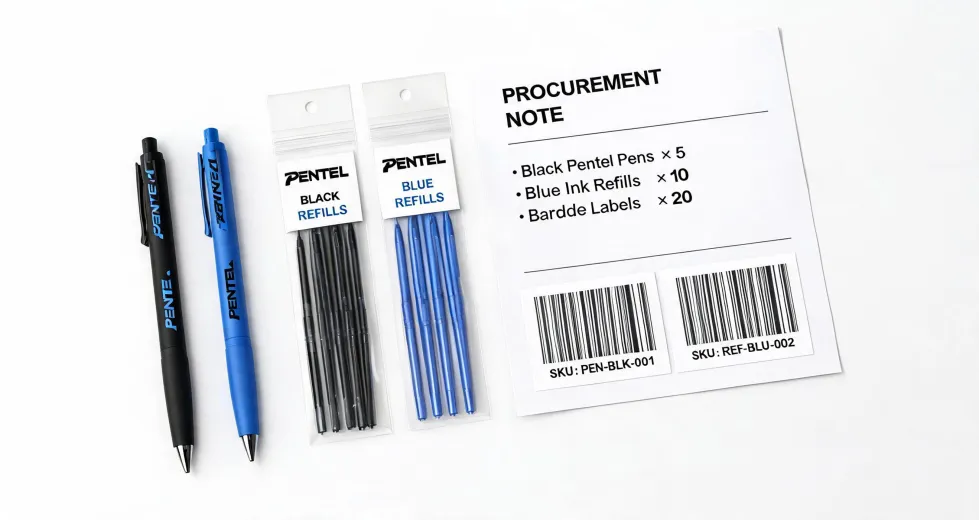
One final habit saved me throughout the project: I kept a Pentel pen next to the spreadsheet. It’s not the fanciest pen in the drawer, but it’s the one I reach for when a number needs correcting. A good estimate should be correctable, because the first answer is usually wrong.
If you still want to know what is the best printer for home use, my answer is: it’s not a model. It’s the one with no hidden “what’s not included” list. The best printer is the one you can calculate before you buy it—and the best question to ask is the one I almost didn’t ask: “What’s not included?”
I still kick myself for how long that took. If I’d asked that question on day one, I could have saved a month of spreadsheet grief. But I didn’t. So now it’s my standard question for every quote, every vendor, and every price list. Ask it early. Ask it in writing. And keep a Pentel pen nearby when the answer changes what you thought you knew.