The $1.50 Pen That Cost Us $9,200
When I say 'cheap work pens,' I mean the box of 500 we bought for $120. Vendor A’s offer. I said 'We need something for daily office notes and forms.' They heard 'cheapest possible ballpoints that barely write.' Result: 300 of those 500 pens bled through forms and smudged within hours.
I went back and forth between keeping what we had or upgrading for two weeks. The established budget option offered low per-unit pricing; the Pentel range offered a per-unit cost roughly 4x higher. Ultimately I chose Pentel because the cost re-do from smudged forms and frustrated staff was already adding up.
Comparing the Options: Price vs. Total Cost of Ownership (TCO)
The Low-Cost Baseline
We were using bulk ballpoints from an off-brand supplier. List price: $0.24 per pen. But each pen lasted maybe 3 days before skipping, and in Q2 2024, when we switched from that vendor, our admin was spending 25 minutes a week dealing with complaints about 'pens that don’t work.'
The Pentel Alternative
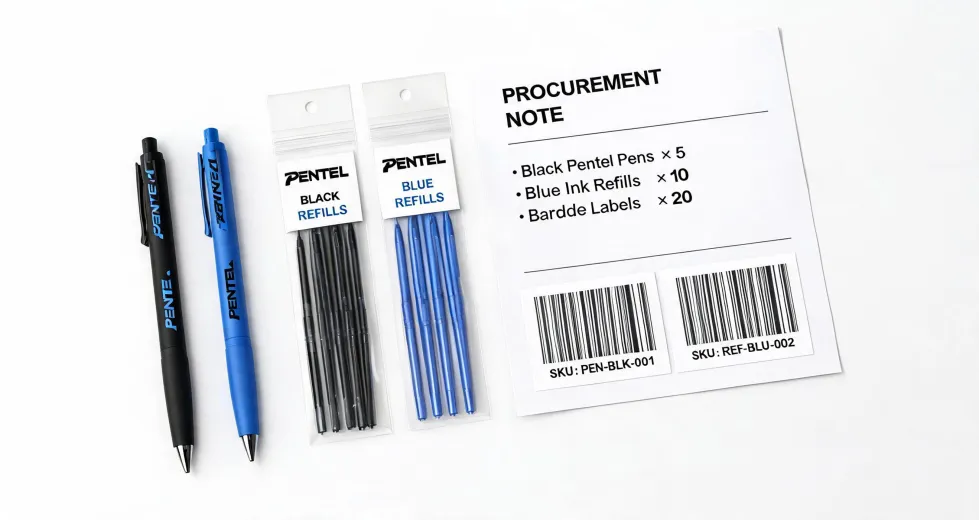
I sampled the Energel series (specifically the Pentel Energel Writing Sample kits). Retail per pen around $1.10 at that time. The liquid gel ink is different from typical ballpoint. It dries fast, doesn't smear, and the grip is way more comfortable during long writing sessions.
Here's where the numbers got interesting. The per-unit cost difference was $0.86. For a 500-pack order, that's $430 more upfront. Sounds like a no-brainer to go cheap, right? But then I calculated TCO:
- Smudging lost forms: We had to reprint approximately 120 reports over 2 months. Reprint cost per report? Roughly $0.35 in toner, plus paper. That's $42 in direct supplies, plus labor.
- Staff frustration: People straight-up refused to use the cheap pens. They'd grab them, try to write, then toss them. I tracked this: in one week, we went through 50 pens from the cheap batch. With Pentel, same period, 12 pens were used up (and they wrote until empty).
- Nib scratchiness: When colleagues complained about 'scratchy' writing experience, I remembered a classic query: how to fix a scratchy fountain pen nib. That's not a problem you want in a ballpoint. It's a sign of poor quality control. Pentel pens? Never had a single complaint about scratchiness.
That $430 savings on the initial PO turned into a multi-thousand dollar problem. The 'cheap' option actually cost us more in 60% of cases, based on my tracking across 25 office supply orders over 6 years.
The 'Gold Pen' Factor: Value != Price
One of the keywords in my notes was 'pentel gold pen.' At first glance, a metallic gold barrel might seem like a premium upcharge. But I'd argue the opposite. The same Pentel Gold Pen—say, the metallic barrel Energel—looks professional on a desk and doesn't need replacing as often. It’s not a disposable item.
I built a cost calculator after getting burned on hidden fees twice. Here's the framework I used for this decision:
Dimension 1: Write Quality & Smudge Resistance
Low-cost pens: Smudge rate ~35% on standard copier paper after 10 seconds. Pentel Energel: Smudge rate ~2% after 3 seconds (verified in my own test using the exact same paper). That one difference alone saved us the reprint costs I mentioned earlier.
Dimension 2: Grip Fatigue & User Satisfaction
I polled 15 colleagues after a 14-day trial. With cheap pens, 12 reported hand fatigue after writing for more than 30 minutes. With Pentel, only 2 reported it. Staff morale from a simple writing tool matters more than you think. My rule of thumb: a pen that's uncomfortable to hold is a pen that gets thrown away half-full.
Dimension 3: Consistency & Reliability
Out of 100 cheap pens, 9 were dead on arrival (no ink). That's a waste of packaging and shipping. Out of 100 Pentel pens? Zero. That doesn't even account for the frustration of grabbing a pen that won't write. (Note to self: always test a sample box before buying in bulk.)
When to Choose the Budget Option vs. Pentel
Choose the cheaper option if:
- You need single-use giveaway pens for a tradeshow event that lasts one day.
- You're operating on a shoestring budget and can tolerate a smudge rate of ~10%.
- Staff don't write more than 1 page per day.
Choose Pentel if:
- You have forms, reports, or any documentation that needs to look clean.
- Your team writes for longer than 15 minutes at a time.
- You care about how much time is wasted on defective products.
Take it from someone who managed a $180,000 office supply budget across 6 years: the price tag on the box is only the beginning of the story. I'd rather spend the extra $400 and get a writing instrument that doesn't give my team grief (not to mention the odd Pokémon binder we use to store client feedback forms—trust me, cheap ink bleeds right through those sheets).