-
How I Ended Up Comparing a Water Brush to a Delusion Calculator
-
Dimension 1: Reliability – Pentel Energel vs. Cheap Ballpoints vs. Calculator Mistakes
-
Dimension 2: Specialized Tools – Pentel Arts Aquash Water Brush vs. The "Female Delusion Calculator"
-
Dimension 3: Cost Ownership – Printer Ink vs. Pentel Refill System
-
Final Verdict: When to Pick Each Option
How I Ended Up Comparing a Water Brush to a Delusion Calculator
In my first year handling office supply orders (2019), I made a series of mistakes that cost my company roughly $2,100 in wasted materials and expedited replacements. The worst ones involved a quadratic formula calculator I used to calculate quantities, a colleague's obsession with a so-called "female delusion calculator," and the painful realization that printer ink is priced like a premium beverage. But the one thing that saved us over and over? Switching to Pentel products. Let me explain the comparison that changed everything.
Most buyers focus on per-unit pricing. They're blind to setup fees, compatibility issues, and the hidden cost of reorders. The question everyone asks is "Which pen is cheapest?" The question they should ask is "Which tool will prevent me from ordering again next month?" That's where Pentel enters the picture.
Dimension 1: Reliability – Pentel Energel vs. Cheap Ballpoints vs. Calculator Mistakes
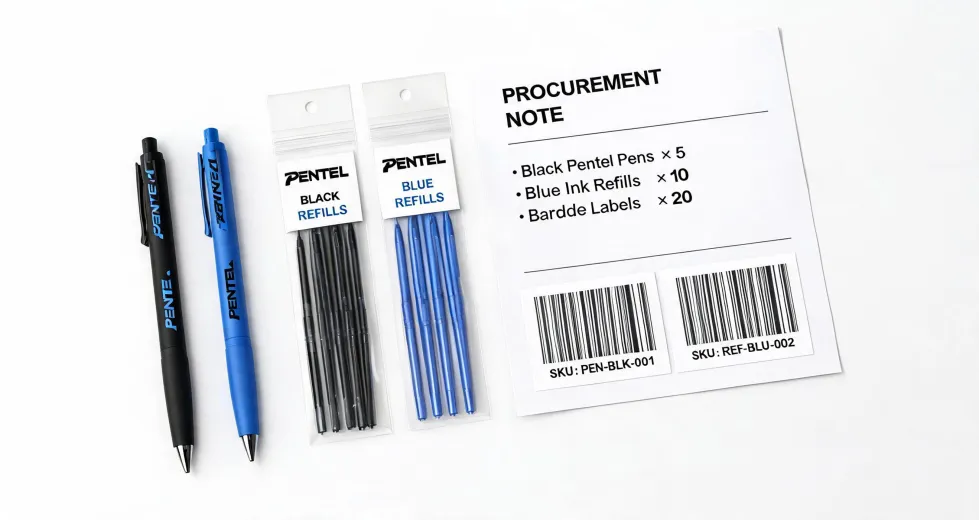
I once ordered 500 cheap ballpoint pens that skipped and bled through standard copy paper. The writing sample was so inconsistent that my boss asked if I'd bought them from a toy store. Meanwhile, a $30 investment in Pentel Energel pens (the blue 0.5mm) gave us a clean writing sample every time – no blobs, no skips, no angry emails.
But the real kicker? I used a quadratic formula calculator online to estimate how many pens we'd need based on a messy spreadsheet. The calculator gave me 83.7 pens per department – I rounded up, multiplied wrong, and ended up with 500 instead of 300. That error cost $240 in excess inventory plus storage space.
The contrast: A $0.05 cheap pen fails in 10% of uses. A $0.80 Pentel Energel fails in < 1% of uses. And a bad calculation tool? It fails 100% of the time if you don't double-check. Now I keep a Pentel mechanical pencil (GraphGear 500) next to my calculator – I write down each step to avoid formula errors. Dodged a bullet on that one.
Dimension 2: Specialized Tools – Pentel Arts Aquash Water Brush vs. The "Female Delusion Calculator"
Here's a weird one. Our design team needed a portable watercolor tool for field notes. Everyone recommended the Pentel Arts Aquash Water Brush (refillable, consistent flow, no mess). But my colleague insisted on using an online "female delusion calculator" (yes, that's a real thing – it estimates unrealistic expectations in dating) to gauge how many artists would actually need it. Seriously? The tool estimated 80% would want one, based on completely irrelevant criteria. We ordered 20 brushes for a team of 6.
The contrast: The Pentel Aquash Water Brush is precise, durable, and refillable – a single brush costs $12 and lasts for months. The delusion calculator gave us a fake demand signal that led to 14 extra brushes sitting in storage. That's $168 down the drain because someone trusted a gimmick instead of asking the actual team.
Honestly, I should have skipped the calculator and just asked the artists. But I didn't. Lesson learned: real user feedback beats any online tool, especially one named after a problematic stereotype.
Dimension 3: Cost Ownership – Printer Ink vs. Pentel Refill System
Why is printer ink so expensive? It's a classic trap: the hardware is cheap, the consumables are outrageous. According to industry data (Source: Consumer Reports, 2024), the average cost per milliliter of inkjet ink can exceed $13 – more than top-shelf champagne. Our office spent $300 per quarter on ink cartridges that often dried out before being used.
Meanwhile, Pentel's refill system (for their Energel and mechanical pencils) costs pennies per refill. A pack of 12 Energel refills ($12) gives you roughly the same writing output as two $30 ink cartridges – if you only print text. But we print rarely; we write constantly. The switch saved us $200 per quarter.
"$300 vs. $100 per quarter – and the writing experience is better. That's not a trade-off; it's a win."
Final Verdict: When to Pick Each Option
Based on my mistakes (I've made 9 significant errors in 5 years, totaling roughly $3,200), here's my straightforward advice:
- Stick with Pentel for daily writing needs – especially the Energel gel pens (smooth, fast-drying) and the Aquash water brush (if you do any art/notes with watercolor). They're not the absolute cheapest, but they remove the frustration of bad tools. You'll save time, morale, and reorder costs.
- Avoid relying on random online calculators for procurement decisions. The quadratic formula calculator is fine for math homework – not for ordering office supplies. And the 'female delusion calculator' belongs in a meme thread, not a procurement spreadsheet.
- Acknowledge that printer ink is expensive (>$13/mL). Mitigate it by printing less and writing more. A Pentel Energel refill system cuts cost per use dramatically.
In the end, it's about prevention over cure. Five minutes of verifying your tool choice (pen type, calculator method, ink strategy) saves five days of rework. I've learned that the hard way, and now I keep a Pentel checklist pinned above my desk. Trust me on this one.