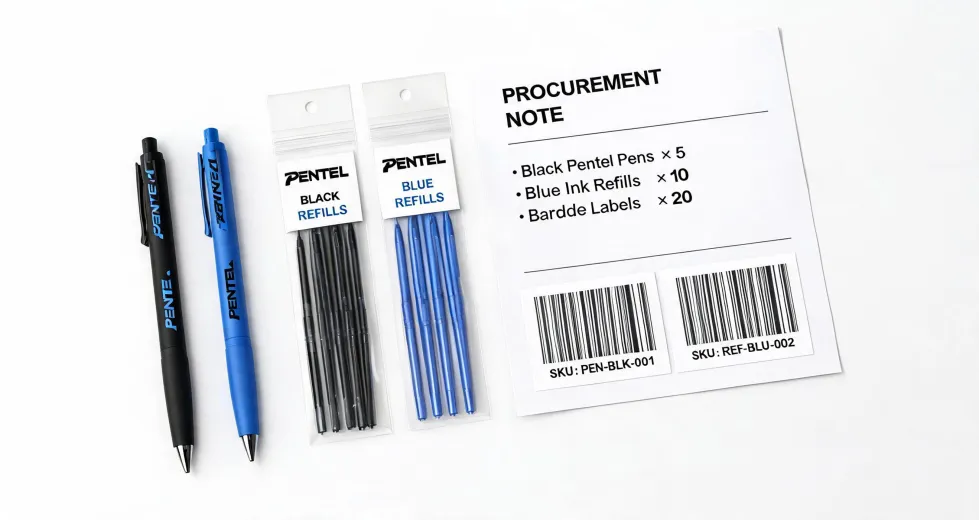
If you want your Pentel refillable brush pen to last more than a month, don't fill it with the cheapest ink you can find. And if you're using Pentel 0.7mm pencils and getting constant breakage, the lead grade is probably wrong.
I learned both of these lessons the hard way. I spent $15 on a set of art markers that I ruined in two days because I filled the brush pen with the wrong thing. And I went through a full pack of 0.7mm leads in a single week because I assumed 'all 0.7 is the same.' Spoiler: it's not.
Here's the breakdown of what actually matters for these two Pentel staples—from someone who's made every mistake in the book so you don't have to.
The Refillable Brush Pen: Pick Your Ink Like a Person, Not a Robot
So you bought a Pentel refillable brush pen. Good call. The brush tip is flexible, the build is solid, and the idea of never throwing away a marker again is great. But here's where I messed up: I treated it like a regular pen.
I grabbed a bottle of India ink that I had lying around. Yes, India ink is ink. No, you shouldn't use it in a brush pen designed for water-based or specific pigment inks. The result? The brush tip stiffened after two days, the ink clogged the feed, and I had to throw the whole thing away. $12 pen, $5 ink, zero usable art. That's a $17 mistake that a $4 bottle of proper Pentel ink would have prevented.
What You Should Actually Use
- Pentel's own cartridge ink: The easiest and safest option. The cartridges are pre-filled and designed for the pen's feed system. No mess, no guesswork.
- Waterproof pigment inks: Brands like Dr. Ph. Martin's or Winsor & Newton make high-quality bottled inks that work well, but you must test them. I ruined a second pen with a 'fast-drying' ink that dried before it could reach the tip.
- Fountain pen inks: Some work, some don't. The issue is often the viscosity; if it's too thin, it will feather or bleed. Diamond Ink is a safe bet. I've had success with it.
A reader asked me about using acrylic paint. Here's a quick detour: can you use acrylic paint through a Pentel brush pen? Technically, yes. In practice, no. Acrylic is thicker and will clog the feed within a few uses. If you want acrylic-like effects, get a dedicated acrylic marker. The Pentel is for fluid inks, not paint.
The 0.7mm Pencil Lead: It's Way More Complicated Than You Think
I switched from 0.5mm to 0.7mm Pentel pencils because I wanted a bolder line without the constant breakage I'd experienced with 0.5. What I didn't realize was that 0.7mm leads are actually more prone to breakage if you use the wrong hardness. I was using 2H lead—hard as a rock—and it snapped constantly. The problem wasn't the pencil; it was my ignorance.
Here's the rule of thumb: for 0.7mm, stick to B or HB leads for general writing. HB is the standard balance of darkness and strength. B gives a darker, smoother line but is slightly more fragile. H leads are for drafting on hard surfaces; they're terrible for everyday use. 2H in 0.7 is basically asking for frustration.
My Personal Cadence
- For daily note-taking: Pentel AIN STEIN 0.7mm HB - Smooth, dark enough, and almost never breaks.
- For sketching: Pentel AIN STEIN 0.7mm B - Gives me the line variation I need without the constant snap.
- For technical drawings (rarely): Pentel Super Hi-Polymer 0.7mm H - But even then, I'm careful.
Another thing: don't buy leads from random Amazon sellers. I grabbed a five-pack of a cheap brand once, and half the leads were broken in the box. The other half snapped on first use. You don't need to overpay, but buy from a known brand (Pentel, Uni, Pilot) and from a reputable seller. This is totally anecdotal but it saved me a ton of headache.
The Bottom Line (and Some Caveats)
Here's the thing about Pentel products—they're incredibly well-engineered, but they're not magic. The pen won't make you a better artist, and the pencil won't make you a better drafter. What they will do is perform exactly as designed if you use the right consumables.
But then again, the industry has changed. Five years ago, 'refillable' meant complex, messy bottles. Now, with cartridge systems and better ink formulations, it's easier than ever. The fundamentals of ink chemistry haven't changed—acids in ink can damage metal parts, which is why you should avoid high-acid inks—but the execution has transformed. Pentel's own cartridges are a no-brainer for most users.
What about if you don't use these pens daily? That's a different ball game. If you're an occasional user, you can get away with cheaper ink in a pinch. But if you're writing or drawing consistently, invest in the right stuff. The cost per use drops to pennies after a month.
I'm not an ink chemist, so I can't speak to the long-term degradation of non-standard inks. What I can tell you from a hands-on perspective is that sticking to Pentel's recommended inks and lead grades will double or triple the lifespan of your tools. That's a lesson I paid $17 to learn. Now it's yours for free.