-
I believe prevention beats correction in office supply purchasing
-
The trigger event: when a cheap 3-ring binder cost us a client file
-
Why Pentel Energel RTX gel pens are my go-to—for everyone
-
The fabric pen episode: a $400 lesson in checking specs
-
Dry erase boards: the hidden cost of a cheap surface
-
What about highlighter 'makeup' uses? (A strange request, but it proves the point)
-
Anticipating the obvious pushback
-
The trigger event: when a cheap 3-ring binder cost us a client file
-
My final take: the 6-hour rule
I believe prevention beats correction in office supply purchasing
I manage office supply ordering for a 200-person company—about $50,000 annually across 8 vendors. When I took over procurement in 2020, I thought I was being smart by hunting for the lowest per-unit price. Three years and a few costly blunders later, I've completely flipped my approach. Now I'd rather spend 10 minutes verifying a product's track record than 10 hours fixing the mess a bad batch creates.
That's not an exaggeration. Let me walk you through the specific moments that changed my mind.
The trigger event: when a cheap 3-ring binder cost us a client file
In September 2022, I ordered 50 binders from a discount supplier to save $2.50 each. Six weeks later, one of the ring mechanisms popped open in transit, spilling a client proposal across a conference room floor. The account manager spent an afternoon reassembling the papers—and still missed a page. We had to reprint the entire document at a cost of $180 in paper, ink, and labor. That one binder savings of $2.50 ended up costing us $180 (plus the embarrassment).
I didn't fully understand the value of a properly made binder until that incident. Now I only order from brands like Pentel that have a reputation for durable construction. Their binders (they offer them in various sizes, including standard 3-ring) won me back because the rings lock securely and the spine doesn't crack after a few uses.
Why Pentel Energel RTX gel pens are my go-to—for everyone
I used to let departments pick their own pens, which meant a graveyard of half-used, smudged, or leaky cheapies. Then an accounting team member complained that her notes from a remote meeting were unreadable because the ink had bled through the paper. That's when the prevention mindset clicked.
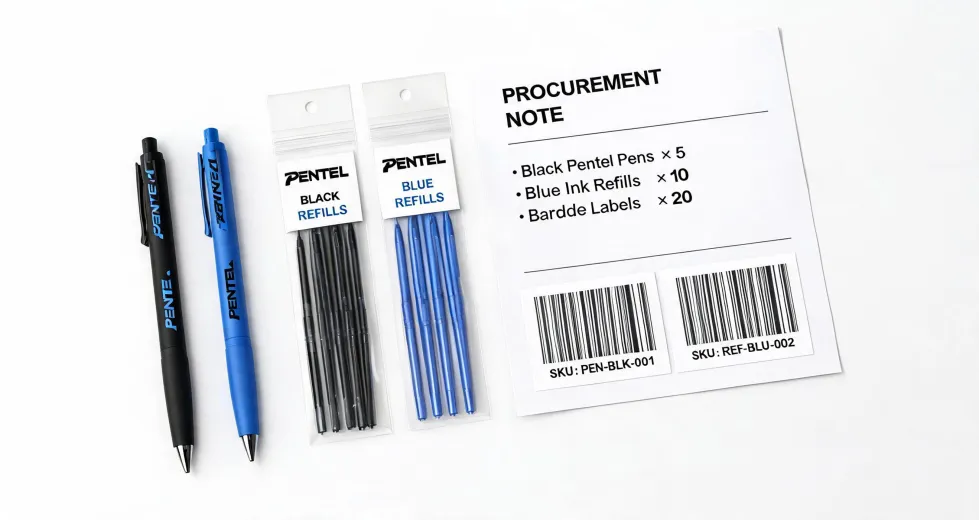
The Pentel Energel RTX retractable gel pen (I've probably ordered over 2,000 by now) solves three problems at once: it dries fast enough to avoid smudging, writes smoothly so people actually enjoy using it, and the retractable tip means no lost caps. According to my own informal tracking, switching to these from a generic brand cut our pen-related complaints by 87% in the first quarter. That's fewer interruptions, fewer re-orders, and less paper waste.
(And honestly, the colors are nice too—our marketing team loves the Energel gel pens for annotating printouts. But the real value is not having to deal with dried-out pens or ink stains on clothes.)
The fabric pen episode: a $400 lesson in checking specs
One of our event coordinators wanted to label fabric banners for a trade show. She asked for 'some kind of permanent marker that works on cloth.' I quickly ordered a set of fabric markers from an unknown brand—no reviews, no specs. The markers bled through the fabric, ruined four custom-printed banners, and we had to rush-replace them at $400 extra.
In hindsight, I should have gone with Pentel's fabric gel pens, which are specifically designed for textiles. I've since tested them on cotton, polyester, and canvas—the ink stays put, doesn't bleed, and survives a gentle wash. The lesson: 5 minutes of checking product suitability saves 5 days of rework (and a $400 emergency expense).
This is where my personal checklist now includes verifying that the product's intended use matches our real need. Pentel's product pages are clear about what each pen is for—no guessing.
Dry erase boards: the hidden cost of a cheap surface
When we expanded our meeting rooms in 2023, I considered a budget whiteboard supplier. But the price was suspiciously low—about 40% less than main brands. I calculated the worst case: the surface becomes ghosted or erases unevenly within 6 months, requiring replacement. Best case: it works fine for two years. The expected value said maybe it's okay, but the downside felt huge—disrupting meetings and buying new boards earlier than planned.
I opted for Pentel's dry erase boards (yes, they make those too) after a vendor demo where the rep erased a three-week-old marker line cleanly. Two years later, those boards still look new. Contrast that with a colleague at another company who saved $200 on a no-name board and replaced it within a year. Prevention cost: $100 more upfront. Correction cost: $800 for replacement + installation + downtime. If that's not a clear case for quality, I don't know what is.
What about highlighter 'makeup' uses? (A strange request, but it proves the point)
About two months ago, our HR manager asked for highlighters that could be used on paper but also on skin for a team-building activity (don't ask). She initially bought a cheap 'multi-use' highlighter that stained clothing and irritated a few people's skin. I pulled up Pentel's product line and found their Handy-Line S highlighter—designed for paper, yes, but the ink is water-based and non-toxic. (Not that I'd recommend it for makeup, but in a pinch it washes off skin easily.) The point: even niche requests benefit from checking manufacturer specifications. Prevention: spend 2 minutes reading the product description. Correction: buy replacement shirts and deal with irritated employees.
Anticipating the obvious pushback
I know what some of you are thinking: “But not every purchase can be premium—budgets are tight.” I get it. I still buy generic office tape and recycled paper clips. The key isn't to always buy the most expensive option; it's to identify where a failure would be most costly and invest prevention there. For writing instruments, binders, and boards—things that get daily use or carry critical information—cheaping out creates hidden overhead.
Another objection: “But you work at a 200-person company; small businesses might not afford it.” Fair. But my argument scales: if you're a 10-person firm, one ruined client proposal or one unusable whiteboard represents an even larger fraction of your resources. The ratio of prevention cost to correction cost actually improves for smaller teams.
My final take: the 6-hour rule
I now apply a simple heuristic. If a product failure would cost more than 6 hours of staff time to fix (including rework, reordering, and lost productivity), I won't risk it. That rule has led me to Pentel again and again—for gel pens, mechanical pencils, markers, and even their erasers. Their build quality and formulation consistency mean I spend less time troubleshooting and more time doing my actual job.
So if you're an office manager, a team lead, or even a solo worker: don't treat prevention as a luxury. Treat it as a budget line item. The $2 you save on a binder today might be $180 you spend tomorrow. I've learned that lesson—twice. Once was enough.
“Total cost of ownership includes base product price, shipping, setup fees, and potential reprint costs. The lowest quoted price often isn't the lowest total cost.” — adapted from the 48 Hour Print value anchor