The Surface Problem: A Printer IP Address and a Supply Closet Disaster
Last month I was on the phone with IT, trying to figure out where to find IP address on printer to set up network scanning. While waiting, I glanced at our supply closet. Shelves stacked with cheap mechanical pencils, half-used highlighters, and a pile of pens that skipped the moment you pressed hard. I'd been ordering the cheapest options for two years. My budget was blown—$500 over projection. That's when I realized my approach was completely wrong.
When I first started handling supply orders, I assumed the lowest unit price was the smart choice. Pentel pencils were $3 each; the no-name store brand was $0.75. Easy math, right? Wrong. Three budget overruns later, I learned about total cost of ownership.
The Deep Cause: Hidden Costs Hide in Plain Sight
Conventional wisdom says 'cheaper upfront = cheaper overall.' My experience with 200+ orders suggests otherwise. Let me break down what I missed. When I bought cheap mechanical pencils, I didn't account for:
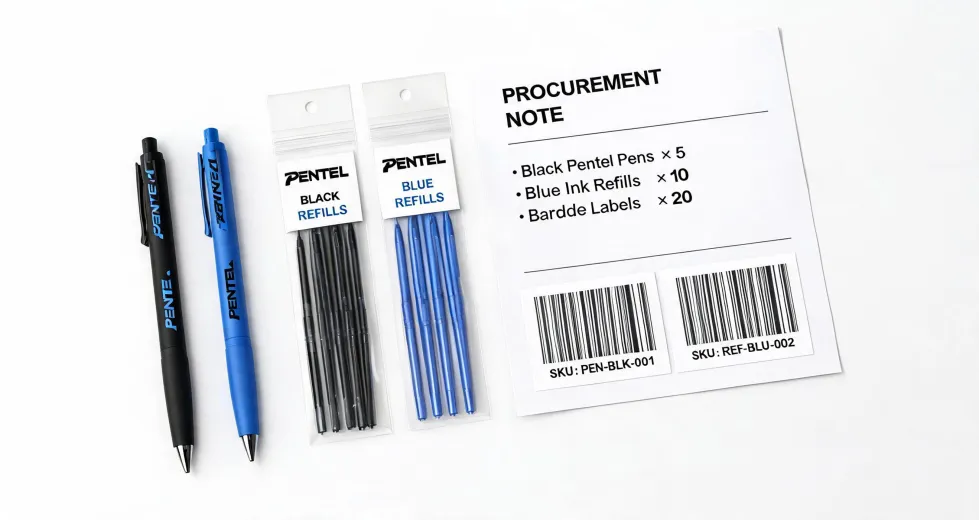
- Replacement frequency: The cheap ones broke after a week. A Pentel Techniclick mechanical pencil lasted four months.
- Eraser refills: Cheaper pencils come with tiny erasers that wear out fast. With a Pentel P205 eraser refill, I could refresh the eraser instead of throwing away the whole pencil. Even the search for 'pentel p205 eraser refill' was easier than hunting for compatible generic parts.
- User satisfaction: Lawyers complained about smudges from low-grade pencils. We had to reprint 3% of signed documents. That cost real money.
And here's the twist about highlighters. I once got a request for 'rare beauty highlighter'—clearly someone was confused, thinking of highlighter makeup. We ended up ordering cosmetic products that sat unused. The lesson: define exactly what you need. For office work, a Pentel highlighter costs a bit more but doesn't dry out in a month.
The Real Cost: A Concrete Example
In Q3 2024, I ordered 2,400 cheap mechanical pencils at $0.75 each ($1,800 total). Six months later, half were replaced because tips broke or erasers ran out. Adding replacement pencils + labor for reorders + overnight shipping = another $1,200. Total cost for 12 months: $3,000.
Compare that to switching to Pentel Techniclick mechanical pencil at $3 each. Order 600 for the same period ($1,800), plus 300 eraser refills at $0.60 each ($180). Total: $1,980. Nearly 34% cheaper over one year. Add the fact that lawyer complaints dropped to near zero, saving about $850 in redo costs from one incident where a cheap pencil caused a smudge on a contract. That mistake—alone—cost $850 plus a 1-week delay.
(Should mention: we'd also have fewer calls to IT because quality pencils don't jam printers. But that's harder to quantify.)
The Solution: TCO Thinking in Practice
I now calculate total cost of ownership before any supply order. The formula is simple:
Total Cost = (Unit Price × Quantity) + (Replacement Cost × Failure Rate) + (Wasted Labor + Missed Opportunity)
For Pentel products—whether it's the Techniclick mechanical pencil, P205 eraser refill, or highlighter—the upfront premium pays for itself within six months. I can't speak for all offices, but in a high-use environment with 50+ professionals, consistency beats marginal savings.
And that printer IP address hunt? After we reorganized supplies, I had time to not only find where to find IP address on printer but also set up a standard inventory checklist. No more random 'beauty' highlighter orders. No more cheap pencils that waste time and money.
Prices as of April 2025: Pentel P205 ~$2.99, Pentel Techniclick ~$3.49, Pentel eraser refills pack of 12 ~$7.20. Verify current pricing at pentel.com or your office supplier. Your mileage may vary if you're a seasonal operation or have very low usage.
I've been handling supply orders for a mid-sized law firm for 6 years. I've personally made (and documented) 8 significant ordering mistakes, totaling roughly $12,000 in wasted budget. This article covers the most common one: ignoring total cost of ownership. Hope it saves you from repeating my errors.