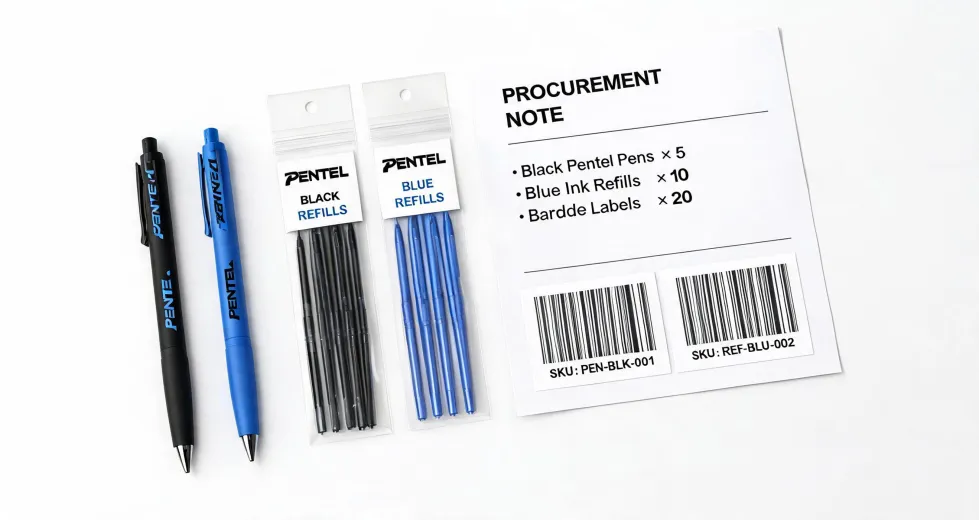
Since 2020, I've managed office purchasing for a 200-person company, and I've learned one thing the hard way: the unit price is just the beginning. The cheapest Pentel pen on a supply list is rarely the cheapest by the time it reaches someone's desk. Add refills, accidental damage, employee frustration, and the time it takes to fix a mistake, and the real cost changes. That's why I order Pentel FriXion pens, Pentel click eraser refills, and a weatherproof outdoor storage box even when the upfront price is higher than the alternatives.
I didn't start out this way. When I took over purchasing in 2020, I compared unit prices from six vendors and picked the lowest line item. It took me about 30 orders and one rejected invoice to see that the lowest unit price didn't mean the lowest cost. Finance rejected a $1,400 purchase because the vendor couldn't provide a proper invoice—just a handwritten receipt. I had to re-order from someone else, and the department ate the cost. That one mistake changed how I buy everything.
I report to operations and finance, so my job is as much about audit trails as it is about pens. I process about 60-80 orders a year, and our annual supply spend is roughly $55,000—maybe $60,000 if you count maintenance supplies. I'd have to check the latest system report, but the point is that small differences add up across hundreds of orders.
Total cost of ownership, for office supplies, includes:
- Purchase price
- Shipping and handling
- The time you spend placing, receiving, and paying for the order
- What it costs when the item fails or gets wasted
- The damage a product can cause, like permanent marker on wood
Put another way: the invoice is what you pay the vendor. TCO is what you pay afterward.
It's tempting to think you can just compare unit prices. I did that for the first six months, and the 'cheapest' option wasn't cheap once I added in the bad invoice, the extra emails, and the time I spent explaining it to finance.
A 'tip calculator google' search is fine when you're splitting a lunch bill, but it's the wrong tool for comparing quotes. Two years ago, a supplier came in 18% cheaper on paper. Then they added a $45 handling fee, a $60 minimum order, and a 10-day lead time. The total was higher, and I had to explain the delay to my operations manager. That's a TCO problem.
For writing instruments, I estimate cost per usable page, not cost per pen. A pen that skips and gets tossed after a few pages is no bargain. A reliable pen that writes to the last refill is worth more than its sticker price. That's why Pentel has been on our approved list since 2021.
How I Present This to Finance
When I ask for a slightly higher budget line, I don't say 'this feels better.' I show the reorder history. Last year, switching a few SKUs to refillable options trimmed our replacement orders for that category by about 20%. That's not a huge number, but it pays for the extra upfront cost. The formula I use is simple: (unit price x expected usage) + processing time + failure cost. If the 12-month total is lower, I buy it.
I also keep a running list of items people asked for once and then stopped using. That list has caught more waste than any vendor pitch. A cheap product you never use costs more than an expensive one you use every day.
What I Keep Reordering
Pentel makes a wide range—mechanical pencils, gel pens, markers, art supplies, erasers, and refills. From a purchasing perspective, that range is useful because I can consolidate more items into fewer orders. Fewer orders means fewer invoices, fewer delivery boxes, and fewer chances for something to get lost.
Pentel FriXion pen
The Pentel FriXion pen costs more than a basic office pen. I buy it anyway for people who write by hand and need to correct mistakes. The erasable gel ink means the mistake disappears without scratching the page. That saves paper, time, and a trip to the supply closet. There's a limit: FriXion ink reacts to heat, so it's not for legal documents or for anything that sits in a hot car. As of January 2025, that's still the tradeoff, and I plan around it.
If you try FriXion for the first time, test it on the paper you use daily. Most paper is fine, but cheaper recycled paper can catch the gel tip and make skipping worse. That's the kind of detail you only notice after an employee complains about it.
Pentel click eraser refill
One Pentel click eraser refill doesn't look like a big expense. But if you don't stock them, people toss the whole plastic eraser and order a new one. That's a bigger line item, plus waste. The refill is the smaller cost and does the same job. I keep a box of Pentel click eraser refills in the supply room and reorder before the last one runs out. It's the same logic as buying blades instead of a new razor every week.
This is also a forecasting issue. If I only check the supply room when someone asks, I end up with urgent orders and expedited shipping. A small inventory buffer for refills and erasers smooths out the month.
The outdoor storage box that taught me about weather
Not everything in my job is a pen. Last year, our facilities manager asked me to buy an outdoor storage box for seasonal supplies. The cheap plastic option had a lower price tag, but it cracked after one winter. We replaced it with a heavier weatherproof model. That one has been outside since 2024 and still looks fine. The upfront cost was higher; the cost per year of use is lower.
When you compare outdoor storage boxes, look at the plastic's UV rating, the hinge quality, and whether the lid locks. Volume matters, but a box that falls apart in two seasons is not a bargain at any volume.
How to get permanent marker off wood (and why you'll need to know)
At some point, someone will use a permanent marker near a wooden desk or table. Last quarter, it happened in our conference room. If you search "how to get permanent marker off wood," most advice points to isopropyl alcohol. It worked on our finished table: put a little alcohol on a soft cloth, rub gently, wipe dry, and test in a hidden spot first. Do not use nail polish remover; it can take the finish off with the ink. The marker was a $1 item. The cleanup took 20 minutes and some careful rubbing. That's a perfect example of total cost in action.
One caveat: on unsealed wood, the alcohol trick won't work the same way. The marker penetrates the grain, so your options are sanding or living with the stain. If you have unfinished wood furniture, protect it before someone reaches for a permanent marker.
When the Cheap Option Is Actually the Right One
I don't want this to sound like I always buy the premium version. I don't. TCO cuts both ways. If you're buying giveaways for a trade show, a basic Pentel pen is probably correct—it needs to work once and be easy to leave behind. If you're marking boxes in a warehouse, a permanent marker is a permanent marker. I'll take the cheapest one that doesn't smear.
The point is context. I do not mean every purchase should be premium. The most expensive pen in the catalog is not automatically the best, and the cheapest one is not automatically a bargain. The right question is: what will this thing have to do, how often, and what happens when it fails? That's the question I ask before every order now (note to self: add FriXion refills to the Q2 order ahead of time).