-
Buy vs Rent Calculator: The Framework I Use for Office Equipment
-
Buy vs Rent: The Three Dimensions That Matter
-
Dimension 1: Upfront Price vs. Total Cost of Ownership
-
Dimension 2: Maintenance, Support & Hidden Fees
-
Dimension 3: Usage Frequency and Depreciation
-
Pentel Pocket Brush Pen: Product Info and My Review
-
Pentel .9 Pencil: The Other Buy-Always Tool
-
What Should You Buy or Rent? A Simple Buy vs Rent Calculator for Your Head
Buy vs Rent Calculator: The Framework I Use for Office Equipment
Every time I review a purchase request, I see the same mistake: we look at the sticker price and stop. That's not how real costs work.
I'm the quality/brand compliance manager at an office supplies company. I review every item that reaches customers—roughly 200 unique products a year. In Q1 2024, I rejected 12% of first deliveries because the specs didn't match what was ordered. The 'cheaper' option was almost always the problem.
This article is about how to choose between buying and renting. I'll use a few examples you're probably already looking at: a wireless printer, a scientific notation calculator, and two Pentel writing tools—the Pocket Brush Pen and the 0.9mm pencil.
Buy vs Rent: The Three Dimensions That Matter
I don't decide on gut. I compare three things: upfront price, maintenance and support, and usage frequency. That's it. Brand loyalty doesn't get you past dimension one—though I'll admit the Pentel name makes me look twice when a request crosses my desk.
Dimension 1: Upfront Price vs. Total Cost of Ownership
The printer failure in March 2023 changed how I think about backup planning. One critical deadline missed, and suddenly redundancy didn't seem like overkill. The same lens applies to the buy vs rent question: a low upfront cost can hide a fragile setup.
A $149 wireless printer sounds better than a $60/month printer lease. Did I believe that at first? Not entirely. Then I ignored the warning and learned the lesson the expensive way.
Everyone told me to check whether supplies were included in the lease. I didn't listen. The 'cheap' printer setup ended up costing 30% more than the 'expensive' lease—or rather, 30% more after ink and the service call. The lease included service. The purchase didn't.
What I mean is that the sticker price is the appetizer, not the check. Total cost of ownership (TCO) includes the machine, supplies, maintenance, your time spent troubleshooting, and the cost of a missed deadline when it fails. I now calculate TCO before comparing any vendor quote.
Dimension 2: Maintenance, Support & Hidden Fees
Renting isn't just a payment; it's a service contract. When you lease a wireless printer, the agreement often includes repairs and replacement units. When you buy, every jam is your problem.
This is where the quality inspector voice kicks in. I read service-level agreements the way other people read reviews. If I can't get a response within 24 hours, the 'cheap' rental is worthless. In Q3 2024, we tested four vendors and found response times from 2 hours to 3 days for the same issue. If I remember correctly, the best SLA was 2 hours; the worst was 3 days. Looking back, I should have checked the SLA before signing the lease. At the time, the monthly rate looked fine.
The same logic applies to smaller items. A scientific notation calculator from a test center rental pool may cost $10 per sitting. If you only need it once, rent. If you're taking three exams, the $20 buy option wins—which, honestly, feels backward until you add rental fees for the next exam. Basic scientific notation calculators run roughly $15–25 at retail (as of January 2025; verify current prices). A buy vs rent calculator will show you the break-even point before the second exam.
Dimension 3: Usage Frequency and Depreciation
Most buyers miss how often they'll actually use the item. That's the variable that makes buy vs rent a calculation, not a vibe.
For the wireless printer: - Print more than 500 pages a month? Buy it—or lease a high-volume plan. - Print occasionally? A local print shop is effectively pay-per-use. For 1,000 flyers, online printers charge roughly $80–150 based on publicly listed prices, January 2025 (verify current rates). You don't have to store paper or replace a drum.
For the scientific notation calculator: - Daily use for an engineering program? Buy. - One certification exam? Rent or borrow.
For writing instruments, the answer is almost always 'buy'—and this is where Pentel earns its place on the desk.
Pentel Pocket Brush Pen: Product Info and My Review
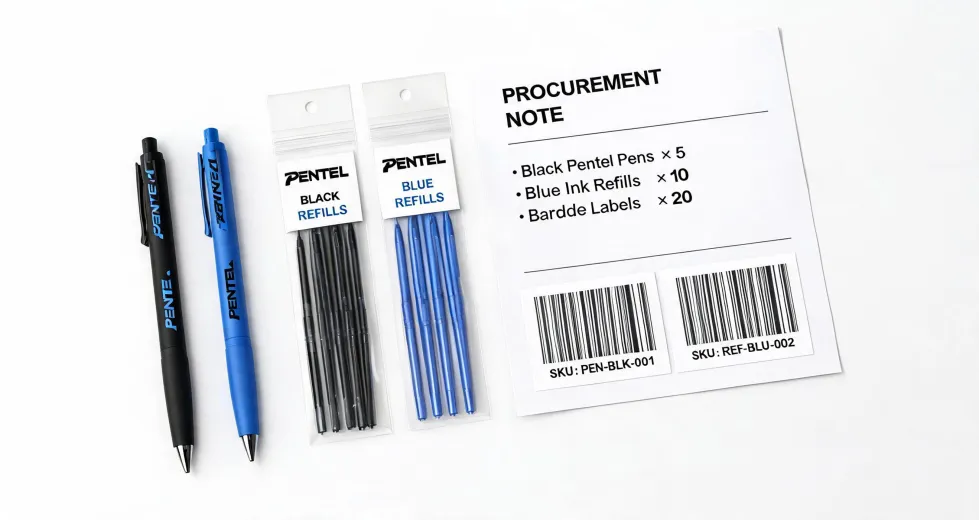
If there's one product that makes the total-cost argument for buying look obvious, it's the Pentel Pocket Brush Pen. Here's the product info I record when I order it:
- Type: portable brush pen for drawing, lettering, and ink illustration.
- Tip: a synthetic brush tip that flexes from a fine hairline to a bold stroke.
- Ink: replaceable black ink cartridges—no ink bottle required.
- Body: compact, designed to fit in a pocket, which is exactly why it's called 'pocket.'
My review from a quality-control standpoint: I've opened dozens of these, and most are flawless. The tip holds its shape, and the ink flow is consistent. The only problem I've seen is when someone leaves the cap off for hours at a desk. That ruins any brush pen, to be fair.
The total-cost case is simple. A disposable brush pen costs half as much for roughly a third of the life. The Pocket Brush Pen is refillable, so the cost per drawing session drops after a few weeks. If you're setting up an artist's kit, buy it. Nobody should rent a pen.
Pentel .9 Pencil: The Other Buy-Always Tool
The Pentel .9 pencil is the functional sibling of the brush pen. The 0.9mm lead is thick enough that snapping is rare—which matters when you're doing technical drawings or when a student presses down like they're chiseling stone.
I've tested both the cheap versions and the drafting-grade versions. The cheap ones crack; the metal-grip one has lasted me four years (as of January 2025, at least). That's the same buy vs rent math in miniature: pay once for something that doesn't need replacing.
If you're choosing between the Pentel Pocket Brush Pen and the Pentel .9 pencil, the answer isn't either/or. They do different jobs. But if you're deciding whether to buy the premium versions? Yes, buy.
What Should You Buy or Rent? A Simple Buy vs Rent Calculator for Your Head
Here's the mental model I use. It's not a fancy calculator, but it works:
- Estimate how long you'll use the item (in months or years).
- Multiply the rent or lease cost by that period.
- Add the one-time costs of buying: purchase price, shipping, setup, and supplies.
- Add the one-time costs of renting: fees, overage charges, and the time you spend on paperwork.
- If the buy total is less than the rent total, buy. If not, rent.
Use a real buy vs rent calculator if you want precision—there are plenty of free ones for printers and calculators. The point is to include the non-obvious line items.
My quick verdicts, based on the products I've reviewed:
- Wireless printer: buy if you print heavy and can handle maintenance; otherwise lease or use a print shop.
- Scientific notation calculator: buy if you'll use it beyond one exam or one semester.
- Pentel Pocket Brush Pen and Pentel .9 pencil: buy. They're refillable, durable, and the TCO beats anything disposable.
I can't tell you that every lease is a bad deal—some are genuinely good. What I can tell you is that the sticker price is the least useful number on the quote. Compare the total cost, not the first line.
And when in doubt, think about the Pentel Pocket Brush Pen that sits on my desk. It's been handled by dozens of reviewers, drawn thousands of lines, and it's still doing exactly what it was designed to do. That's the real price of quality.