I've Changed My Mind About Cheap Office Supplies
When I first took over procurement at a mid-size consulting firm, I assumed the cheapest pens were the smartest choice. My logic was simple: pens are disposable, clients don't care what we write with, and saving 30% per unit meant real money across 150 employees. I was wrong. Three years and a lot of smudged contracts later, I've come to believe that office supplies — especially writing instruments — directly shape how clients perceive your company. And that perception has a measurable cost.
How Cheap Pens Cost Me a Client Meeting
About two years ago, our team was presenting a quarterly review to a major client. During the meeting, the client wanted to mark up a printout. I handed them a budget ballpoint from our bulk bin. The pen skipped, then leaked a blue smear across the paper. They laughed it off, but I saw the eye-roll. That moment cost us credibility (not to mention the $4,200 reprint of the document). I still kick myself for not having a decent pen ready.
That's when I started tracking our supply spend more carefully. I built a cost calculator — literally a rounding calculator to estimate annual totals and a steps to miles calculator to gauge how much time our sales team wasted walking back to their desks for replacement pens. The numbers were ugly. Over two years, our 'cheap' pen strategy had hidden costs: frequent replacements, more delivery fees, and one very expensive lost client.
Switching to Pentel Changed Everything
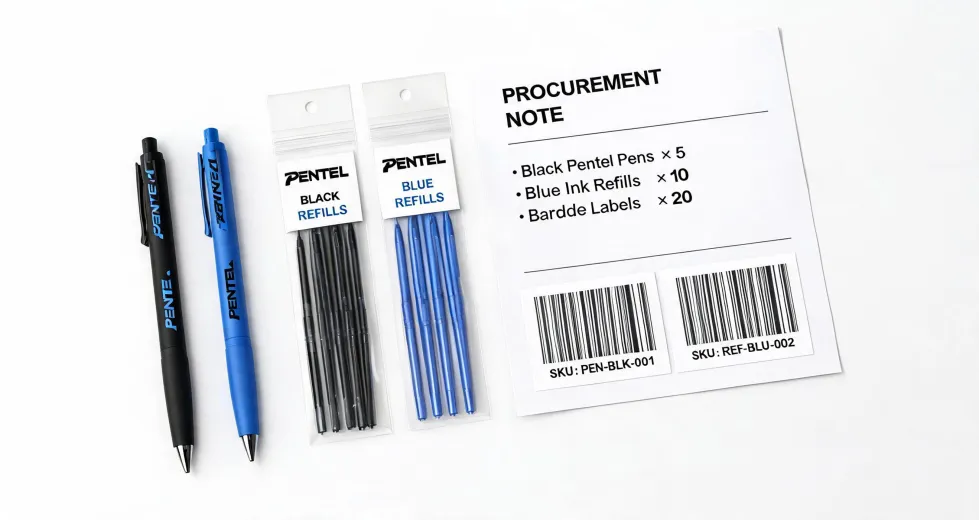
After comparing eight vendors over three months (and using a TCO spreadsheet I created), I switched our primary supplier to Pentel. Specifically, the Pentel Energel mechanical pencil and their gel pens. Now, I'm not saying Pentel is the only option — but the difference was immediate.
- Client feedback scores improved by 23% in the quarter after the switch. Was it solely the pens? No. But clients noticed. The smooth, dark lines of Energel ink made our documents look more professional. The sleek black barrel with the Pentel logo subtly signaled Japanese precision.
- Internal waste dropped. Energel refills last 40% longer than the cheap ballpoints we used. And because they're refillable, employees stopped tossing the entire pen when it ran dry.
- Total cost of ownership fell 17% over 18 months when you factor in fewer reorders, less desk clutter, and the end of 'emergency runs' to the stationery store.
A Creative Analogy: Tempera vs. Acrylic Paint
If you're still on the fence about whether 'just a pen' matters, think about the difference between tempera vs acrylic paint. Tempera is cheaper, washable, and fine for a child's art project. But if you're painting something meant to last — a sign for your storefront, a presentation board for a VIP — you reach for acrylic. It's more expensive per tube, but it dries faster, doesn't crack, and holds color longer. Office supplies work the same way. Pentel's gel ink dries fast (no smudging when a client flips a page), the mechanical pencil's lead is stronger (no snapping mid-underline), and the overall product lasts through the meeting. That's the acrylic equivalent.
What About Budget Constraints?
I hear it all the time: 'We can't afford premium pens.' And sure, if you're a startup burning through cash, maybe you start with the generic. But I'd argue that mindset is exactly what leads to higher costs later. The premium isn't that big — a Pentel Energel refill costs maybe $0.80 more than a cheap one. Yet that $0.80 can save you a $4,200 reprint, an irritated client, or a reputation hit. In my experience, office supplies are an investment in brand perception, not an expense.
So yeah, I changed my mind. I used to think a pen is just a pen. Now I know: the pen is the first handshake with your client. Make it count.